
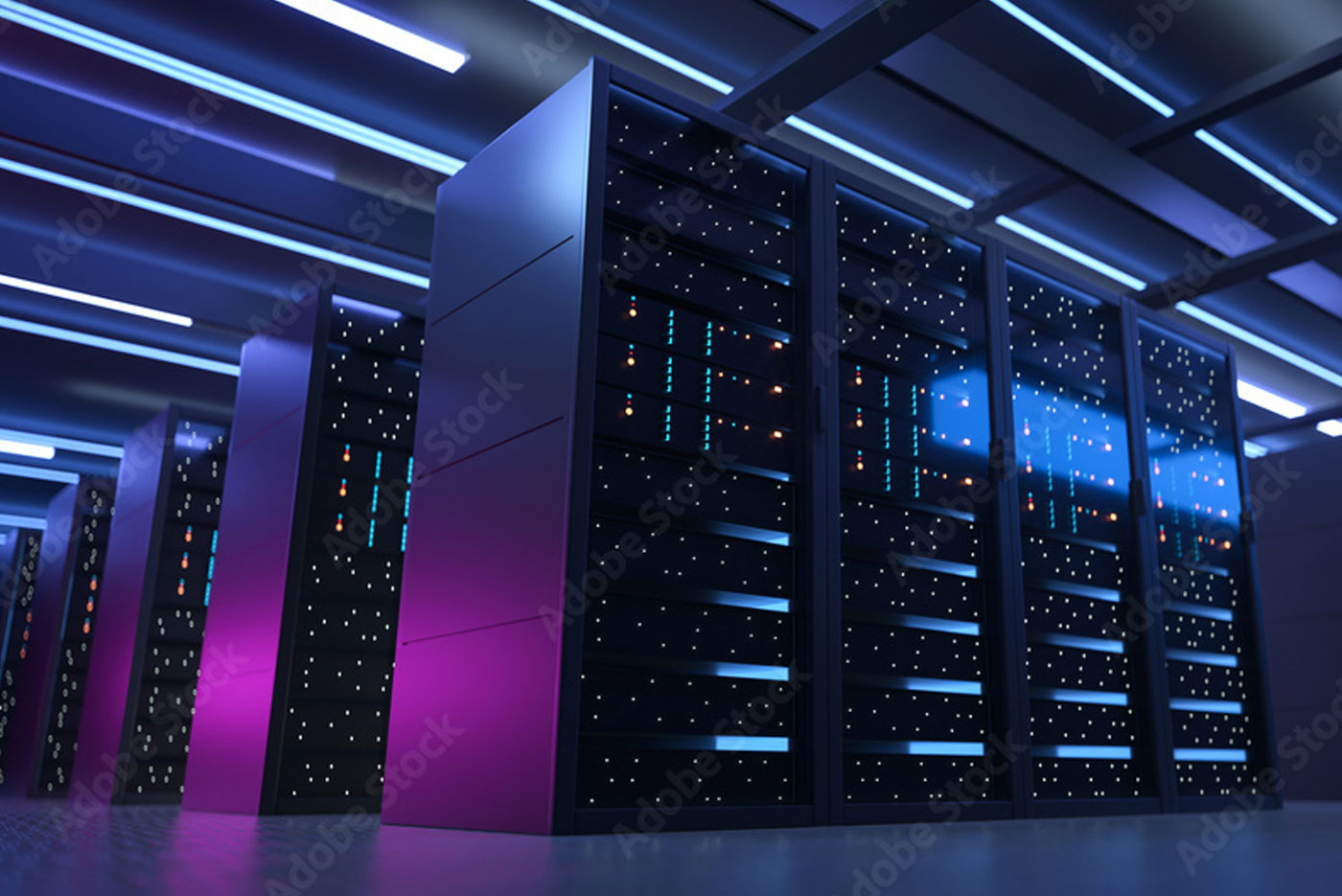
Colocation data centers provide physical space equipped with sufficient power, cooling, and security to host businesses’ computing hardware and servers. The rental capacity includes anything from cabinets to cages to private suites.
Quick links:
What are the different types of colos?
What benefits do they provide?
Private colocation vs public cloud
Experience the power of colocation services—scalable, secure, and reliable data center solutions for your business needs. Schedule a free consultation today!
What Is a Colo?
A colocation data center (colo) is a secure facility where businesses can rent space for their servers and other computing hardware. Colos provide necessary infrastructure such as power, cooling, network connectivity, and physical security while tenants provide their own hardware such as servers, storage, and supporting infrastructure.
Rentable colocation capacity ranges from single server cabinets to caged sections of a data center or even entire private server rooms. High-level infrastructure such as power distribution, backup generators, HVAC systems, and fire suppression are all engineered to maximize reliability and uptime. Colos also enable direct cross-connection to major network carriers in the building.
Companies utilize third-party colocation to leverage expertise around data center management so they can focus more on core business initiatives than on owning and operating their facilities. The specialized data-center staff handles physical security, environmental monitoring, and routine hardware maintenance as part of the customer service offerings.
Research by Gartner found that 80% of enterprises will shut down their traditional data centers by 2025. Colocation data centers provide a better work environment and more agile solutions.
What Are the Different Types of Colos?
Colos offer several models to meet varying needs for privacy, security, and flexibility. The three most prevalent data center options are:
- Retail colo
- Caged colo
- Suite-based colo
Retail Colocation
Retail, or standard colocation, involves renting dedicated cabinet space for servers and networking equipment within a large shared data hall. These individual locking racks provide a cost-efficient way to house critical IT infrastructure and interconnect hardware.
Retail colos allow for simple scale-up by installing additional adjacent cabinets connected to original deployments.
Caged Colocation
For enhanced isolation, caged colocation dedicates enclosed, secure areas containing multiple server racks to individual organizations separated by chain link fencing. Companies lease entire caged-off sections of floor space tailored to current rack requirements with the ability to easily expand square footage later by adjoining additional caged space as needs grow.
Suite-Based Colocation
The most exclusive form of colocation is a self-contained private suite within the same facility as other data center tenants. These individual rooms operated solely by the contracting client offer the highest level of equipment isolation, customization, and access control.
Suite colo provides an opportunity to architect a truly unique IT environment within enclosed, dedicated spaces.
What Are the Benefits of Colocation Data Centers?
There are many advantages of using colocation spaces over other types of facilities:
- Cost savings. Colocation data centers allow businesses to save on the significant capital investments associated with building and maintaining their own data centers. This includes savings on hardware, infrastructure, and facility leasing costs. Financial savings can free up capital for investment in advanced technology or business expansion.
- Increased reliability. Colocation centers offer an array of redundancies to ensure uninterrupted service, most notably in power and cooling systems. They also offer greater protection from power outages due to the numerous data backups in place.
- Improved performance. Colos use up-to-date computing equipment and strategic proximity to network providers to optimize performance. These facilities are often equipped with the latest in server, storage, and network technology, ensuring that businesses can leverage high-performance IT infrastructure without the necessity of continual equipment upgrades in-house. The physical location of these facilities, often close to major network providers or end users, results in lower latency and faster data transmission.
- Scalability. Colocation offers businesses the flexibility to scale up or down easily, paying only for the space and bandwidth they need.
- Risk management. Colocation facilities have safeguards and backups in place to ensure business continuity and keep everything running in the event of natural disasters and data breaches.
- Better connectivity. Colocation data centers have fully redundant network connections, to ensure that business-critical applications always run smoothly. They also offer direct cost-effective connections to multiple internet service providers.
- Skilled staff and support. Most colocation providers offer a range of managed services, from basic hardware and network maintenance to complex tasks such as disaster recovery planning and execution.
- Security and compliance. Colocation data center providers have multilayer security to protect infrastructure, such as IDS systems, encryption, firewalls, and other security measures. Physical security measures may include security guards, cameras, and a 24/7 security staff.
Colocation Facility Features
Colos provide a range of features that support the operation and management of these systems. Here are some of the common features of colocation facilities:
- Physical infrastructure. Colos are constructed with resilient building materials, and they are compartmentalized to contain fires and damage.
- Power systems. Multiple A/B electrical feeds provide fully-redundant, enterprise-grade power with battery and generator backup ensuring uninterrupted power.
- Cooling technology. Redundant HVAC and cooling units maintain optimal temperatures to protect the hardware.
- Fire protection. Early smoke detection, paired with gas or water-based suppression systems, prevents and contains fires to minimize risk.
- Network connectivity. Dual-path fiber and ethernet architectures deliver ultra-low-latency bandwidth with fully redundant internet connectivity.
- Remote technicians. Data-center technicians offer remote troubleshooting, hardware tweaks and repairs, reboot and power cycling, cabling, and visual inspections.
Leading Colocation Providers
There are several major global colocation providers that you can consider when evaluating third-party data center facilities.
Let’s take a look at two of the top providers.
Equinix
- Global footprint of over 200 data centers across 26 countries on 5 continents
- Direct connectivity to AWS, Microsoft Azure, and Google Cloud Platform
- Industry-leading uptime of 99.99% guaranteed
- Unique ecosystems in facilities with thousands of networks and cloud providers
- Robust physical security leveraging strict protocols and biometric access
- Global-solutions engineering teams provide design, implementation, and support
Digital Realty
- Over 290 facilities in 24 countries on 6 continents
- 4,000+ enterprise customers across a variety of vertical industries
- PlatformDIGITAL provides access to IaaS cloud providers through a single provisioning portal
- Wide range of pre-engineered colocation configurations from racks to suites
- Expert teams specializing in data center operations, construction, and commissioning
How to Connect to Colocation Sites?
Colocation sites offer abundant interconnectivity to enable secure hybrid-IT infrastructure:
- Local area network connections
- Long haul carrier connectivity
- Public and private peering
- Hybrid cloud integration
Local Area Network Connections
Many colocation providers have existing local fiber networks allowing cost-effective, point-to-point connections between the colo facility and nearby corporate locations with speeds from 10–100Gbps.
This facilitates low-latency local data-transfers and disaster recovery replications.
Long Haul Carrier Connectivity
On-net, telecommunication carriers house equipment within the same building enabling colocation customers to purchase dedicated, private bandwidth for national or global connectivity. Capacity ranges from 50Mbps–100Gbps.
This powers site-to-site connectivity and remote machine access.
Public and Private Peering
Data centers facilitate direct interconnection to major internet exchanges as well as private peering with popular content and service networks. This efficiently routes traffic to minimize hops and improve performance.
Hybrid Cloud Integration
Direct interconnectivity between colocation environments and public-cloud on-ramps like AWS Direct Connect, Microsoft ExpressRoute, and Google Cloud Interconnect placed in the same facilities makes hybrid infrastructure simple to deploy and manage. This enables workload mobility across infrastructures.
The abundance of connection options between colocation sites and local networks, national backbones, peering exchanges, and cloud gateways provides flexibility for businesses to customize distributed, resilient, and efficient IT infrastructure.
Private Colocation vs. Public Cloud
Many enterprises today are considering initiatives around digital transformation and cloud migration. Key decisions involve whether to invest in private colocation at third-party data centers or whether to fully leverage public cloud and cloud service providers.
Security and Control
Colocation environments allow full control and ownership of hardware and software with dedicated space for maximum isolation.
Public clouds enable the configuration of virtualized resources but the physical infrastructure is shared.
Hardware Ownership Costs
Private colocation requires upfront capital expenditure and refresh costs for hardware/networking gear.
Public clouds offer subscription-based spending allowing conversion of these costs to flexible operating expenses.
Performance and Latency
On-premises data centers enable lower latency given their closer proximity to users and applications.
Public clouds can carry higher latency based on location and network congestion.
Uptime and Reliability
Properly architected center spaces offer maximum uptime and reliability given redundancy and lack of resource contention.
Cloud reliability is dependent on the provider’s service level agreements but still carries dependence on shared infrastructure.
Scalability Approaches
Public clouds allow near-real-time bursting for workload spikes and seasonal capacity needs.
Scaling private colocation requires installing additional racks in advance along with data migrations.
As enterprises accelerate their digital transformation initiatives, evaluation of private colocation facilities against public cloud provider solutions is crucial to architecting the right foundation for current and future goals around efficiency, scale, control, and cloud migration.
Colocation Compared to Alternative Approaches
| Colocation | Managed Hosting | On-Prem Data Center | |
| Ownership model | Rent space, own hardware | Rent hardware and space | Own building and hardware |
| Location flexibility | Choose from provider locations | Typically single location | Limited based on existing buildings |
| Latency and network | Very low latency and high bandwidth | Varies based on location | Dependent on an internal network |
| IT infrastructure control | Full control of owned hardware | Shared hardware environment | Complete control of systems |
| Compliance and security | High standards given provider expertise | Shared responsibility model | Fully owned compliance posture |
| Scalability approaches | Scale by renting additional facility space | Constrained by provider capacity | Requires own capacity planning |
| Cost model | Leased space and owned hardware costs | Subscription model with elastic capacity | Large, upfront, fixed, capital costs |
About Symplicity
Think of us as your colocation consultants. Our expertise lies in delivering comprehensive colocation solutions that can revolutionize the way you manage your IT infrastructure. Here are the primary areas we emphasize to guarantee your success:
- Effortless connectivity: we prioritize establishing a seamless and reliable network connection within our colocation facility. This ensures that your data and applications are always accessible, promoting uninterrupted business operations.
- Scalable infrastructure: our focus extends to providing you with a flexible and scalable IT environment. As your business grows, our colocation services can easily adapt to accommodate increased demands, eliminating concerns about outgrowing your existing infrastructure.
- Enhanced collaboration: we understand that efficient communication is vital for your business. Our colocation solutions are designed to foster collaboration among your team members and partners, facilitating smoother workflows and decision-making processes.
Our commitment is to offer you the expertise, guidance, and ongoing support needed to guarantee a seamless colocation implementation. With our services, you can be confident that your IT infrastructure will be efficient, reliable, and equipped with the capabilities necessary for your business to thrive.
We can also help you with your managed IT, cybersecurity, and business intelligence needs. See our solutions page for the full range of services we offer.
Private Colocation Data Centers FAQ
What is the difference between a data center and a colocation?
The main difference is that a data center refers to the physical facility that houses computing infrastructure, while colocation refers to renting space for your servers and equipment within a third-party data center rather than building your own facility. Colocation allows other companies to benefit from the amenities of a professionally managed data center.
What is the difference between colocation and private cloud storage?
Colocation means leasing physical space for hardware that you own and manage. It is on-premise equipment reserved for one tenant. Private cloud also offers tenant isolation, but the resources are fully virtualized, and elastic infrastructure is provided as a cloud-based service rather than fixed physical equipment you buy and install yourself in colocation. The cloud provider manages it all remotely unlike colocation where you handle the gear.
What are the disadvantages of private data centers?
Major disadvantages of owning private data centers include tremendous capital expenditures and continued costs for building, equipment, real estate, and staffing. Ongoing upgrades and expansions also lead to big costs.
Additionally, holding this specialized infrastructure distracts the organization from its core business. Lack of flexibility and long deployment times for new capacity are other drawbacks.
What is the difference between a data center and a virtual data center?
A traditional data center is a dedicated physical building to house computing infrastructure. A virtual data center refers to logically defined pools of virtualized computing, storage, and network resources abstracted away from the underlying physical hardware allowing programmatic management. So rather than manual configurations, virtual resources are rapidly provisioned through software automation.
What are the benefits of colocation?
The major benefits of colocation include leveraging specialist data-center-providers’ facilities, security protocols, reliability measures, and technical staff rather than owning infrastructure.
Colocation offers geographic flexibility, connectivity, scalability, and disaster recovery protections without upfront capital expenditures. Only usable capacity gets paid for as you scale versus huge initial investments.
What is an in-house data center?
An in-house data center is one built internally by an enterprise to exclusively host their own servers, storage, networking equipment, and related infrastructure with the ongoing expenses of real estate, construction, maintenance, IT personnel, and related costs shouldered by the organization rather than outsourcing to colocation providers.
References
The Data Center Is (Almost) Dead. (2019, August 5). Gartner. Retrieved December 7, 2023, from https://www.gartner.com/smarterwithgartner/the-data-center-is-almost-dead
