
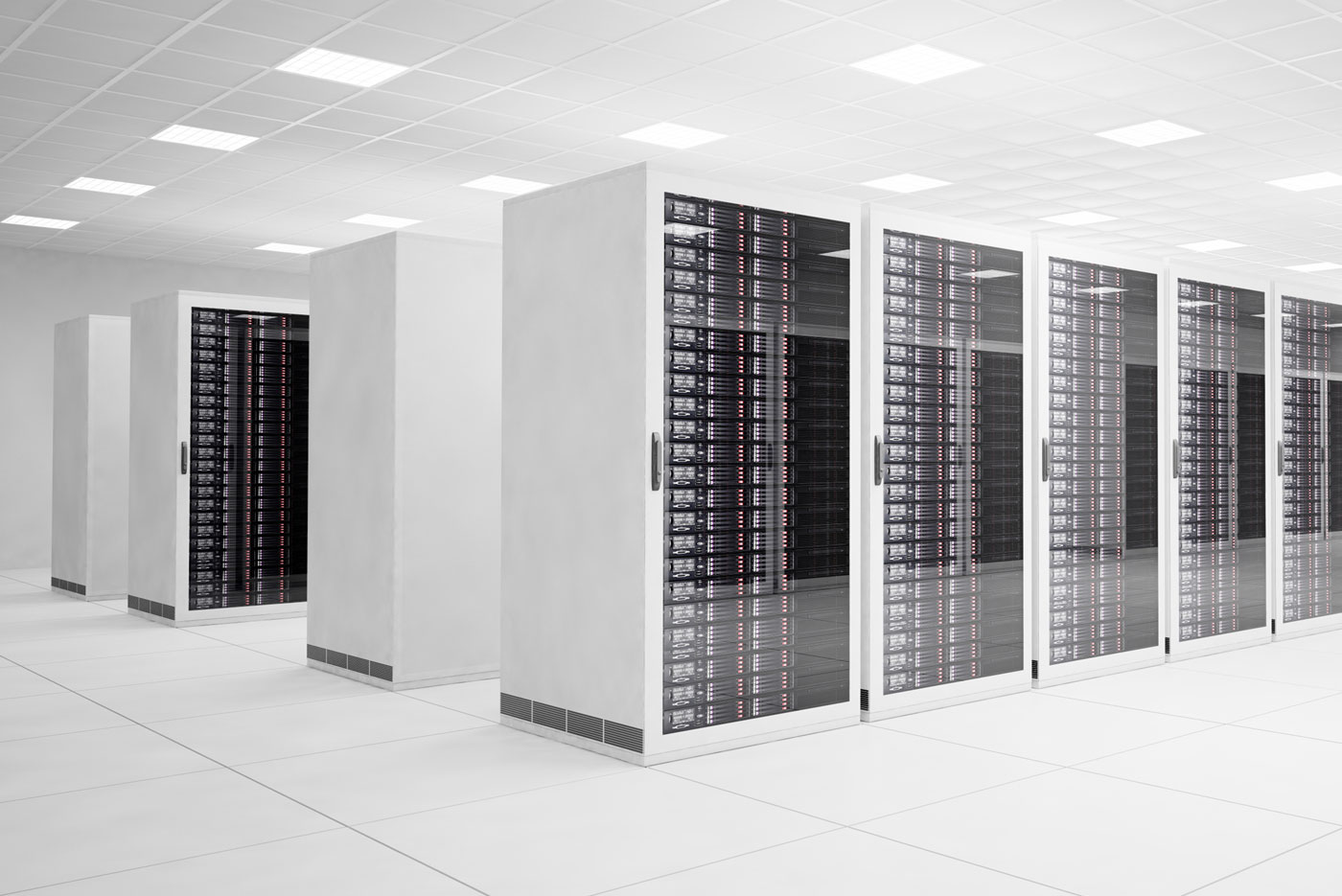
The major difference between colocation (colo) centers and cloud services lies in how they manage and store data.
In colo centers, a business rents space to house their servers. The business owns and operates the hardware, and the facility maintains the infrastructure. With a cloud service, the servers are owned and maintained by the cloud provider and data is managed virtually.
Quick links:
Let us help you choose between colo and cloud services! Schedule a free consultation today, and choose the right path for your organization’s IT future.
What Is a Colocation Service?
A colocation service involves leasing space for servers and other computing hardware in an off-site data center run by a third-party provider. Colo facilities supply secure physical space, reliable power, high-bandwidth networking, and environmental controls for customers to install their equipment.
Unlike a typical data center where all hardware is owned and operated by the company running it, colo sites are essentially rental spaces for customer-owned IT assets.
Businesses use colo services to physically house servers, storage, networking devices, and other mission-critical computing infrastructure in specialized facilities outside their offices. While customers buy and maintain the hardware, colo providers supply conditioned power, cooling, physical security, and network connectivity to enable the equipment to run safely and efficiently.
Colocation allows companies to leverage advanced data center infrastructure while retaining control of their deployed technology. It offers a middle ground between running an on-premises data center and adopting multi-tenant cloud services.
What Is a Cloud Service?
A cloud service means using computing resources provided by a third-party cloud provider instead of on-premises servers and data centers. Public clouds such as AWS, Azure, and Google Cloud Platform allow customers to access shared resources over the internet.
Organizations also use private clouds, which are internal data centers that use cloud architectures and technologies. For both public and private clouds, scalable resources such as storage, networking, and virtual servers are owned and maintained by the cloud provider in off-site facilities.
Businesses use cloud hosting services and platforms to outsource hardware infrastructure and management tasks, so they can focus on applications and data. Virtualized servers, networks, databases, and application services are accessed on-demand. Public cloud offerings range from basic storage and computing to machine learning capabilities, while private clouds provide flexible shared services behind the company firewall.
Cloud resources are hidden from underlying hardware but controlled through software for on-demand management. Cloud architectures let enterprises dynamically scale based on changing demand.
Key Differences between Colocation and Cloud Services
Colo and cloud services are both useful ways to secure and store large amounts of data, but there are several important differences between the two that are worth considering, such as:
- Security
- Cost
- Space
- Ownership
- Flexibility
Security
Colo services provide physical security measures to safeguard on-site customer equipment. Colo facilities utilize technology solutions such as power backups, fire detection systems, and monitoring tools, and they protect hardware around the clock.
Cloud security revolves around virtual measures rather than physical controls. Cloud providers may use antivirus programs, firewalls, and data encryption to harden virtual servers and reduce vulnerability. Extensive internal processes prepare and test cloud systems to handle potential data breaches.
The colo model gives companies direct control over data and network security, while cloud-based solutions are managed by the provider. The right security approach depends on regulatory obligations, risk tolerance, and existing IT resources.
Cost
When it comes to expenses, colo and cloud services have very different cost structures.
- Colocation: higher upfront costs (to acquire hardware), lower ongoing costs
- Cloud: low or no upfront costs, higher ongoing costs
With colo, there are significant upfront costs involved in purchasing hardware such as servers, routers, and racks. After the initial hardware investment, ongoing colo fees include data center space, power, and cooling. These fees tend to be significantly lower than cloud service fees.
Cloud services provide low upfront costs because hardware is owned and maintained by the cloud provider. Pay-as-you-go pricing is based on fluctuating usage and scaling needs. Additional costs also accrue for add-ons such as disaster recovery services, support packages, and data egress charges.
Both models provide potential cost savings in different ways. Colocation avoids recurring fees for owned hardware purchases. Cloud allows organizations to reduce spending on hardware they would otherwise have to buy and maintain themselves.
Space
Colocation provides rentable data-center capacity similar to a private data center, while the cloud is an online solution.
With colocation, the customer rents specific data center space to deploy their physical hardware. This gives complete control over center equipment within the rented facility.
Cloud services provide hosted space accessed online. Customers rely on a high-speed internet connection to access the cloud environment. Cloud storage and infrastructure are maintained off-site by the provider.
The choice between renting physical colo space or virtual cloud space depends on your infrastructure needs and the availability of on-premises facilities. Both of these services allow for expanded available capacity for organizations lacking space.
Ownership
Colo and cloud services have very different ownership models when it comes to hardware and infrastructure.
With colocation, customers buy and own all hardware that is installed and operated within the rented space. The colo provider maintains building infrastructure, and customers manage and support their own IT assets.
Cloud environments are fully owned and operated by the provider. Customers access cloud servers, storage, and other infrastructure virtually rather than buying any physical hardware. Maintenance, upgrades, and system management are handled by the cloud provider rather than the customer.
The final choice of suitable IT ownership depends on budget, staff skills, and whether existing on-premises systems are being migrated. Colocation allows for customer hardware control while the cloud removes the hassles of hardware ownership management. Regulatory compliance also plays a role in who can physically possess data-storage hardware.
Flexibility
When it comes to scalability and adaptability, cloud services provide more flexible options.
Cloud infrastructure such as storage, servers, and networking can be scaled up or down through software rather than hardware. Cloud customers can provision additional resources almost instantly without having to install or configure new equipment. This level of rapid elasticity and automation makes clouds easier to expand according to usage needs.
With colocation, an increase in computing or storage capacity requires the installation of additional physical hardware within the rented space. This provides less seamless flexibility than the cloud since procurement, shipping, installation, and configuration of new equipment take much more time and effort.
However, colocation does offer more control, performance predictability, and configuration customization than cloud platforms. These factors provide a type of flexibility that homogeneous cloud systems cannot.
Counterparty Risk
When you use a cloud service, your cybersecurity is as good as that provider makes it. With colocation, your cybersecurity is as good as you (or whoever you hire to manage your servers) make it.
How to Choose the Right Service?
Whether colo or cloud hosting better meets your infrastructure needs will depend on several key factors.
Consider the following before you make your final decision:
- Existing infrastructure. If migrating legacy hardware with a private cloud service in mind, colocation allows renting data-center space for this dedicated infrastructure. Cloud computing provides easier migration paths away from owned assets.
- Control and customization. colo data centers put hardware choices and access in your hands instead of conforming to a public cloud platform’s constraints.
- Performance needs. Latency-sensitive applications may benefit from colocation’s reliable bandwidth over broadband internet clouds.
- Cost predictability. Upfront colo investments provide longer-term capital expenditure savings compared to variable cloud operating expenses.
- Hybrid solution. A hybrid cloud model blends the customization of colocation with the scalability of public cloud-based services as needs dictate.
- Security and compliance. Physical access and infrastructure ownership may better meet regulatory colo requirements than multi-tenant public clouds depending on the industry.
About Symplicity
Our expertise lies in delivering comprehensive colo and cloud solutions that revolutionize the way you manage your IT infrastructure.
Here are the primary areas we emphasize to guarantee your success:
- Effortless connectivity: we prioritize establishing a seamless and reliable network connection within our colo facility. This ensures that your data and applications are always accessible, promoting uninterrupted business operations.
- Scalable infrastructure: our focus extends to providing you with a flexible and scalable IT environment. Our colo services easily adapt to accommodate increased business demands, eliminating concerns about outgrowing your existing infrastructure.
- Enhanced collaboration: we understand that efficient communication is vital for your business. Our colo solutions are designed to foster collaboration among your team members and partners, facilitating smoother workflows and business processes.
We provide the expertise, guidance, and ongoing support needed for a seamless colo implementation. With our expertise, you can be confident that your IT infrastructure will be efficient, reliable, and adequate for your business to thrive.
See our solutions page for the full range of services we offer.
Colocation vs. Cloud Services FAQ
What are the different types of colocation services?
The main types of colo services are retail colocation, where companies rent rack space, cages, or private suites, and wholesale data center space for renting large footprints to enterprises or cloud services providers.
Colo services also range from basic needs (power, cooling, and network access) to fully managed infrastructure monitoring and on-site support.
What are the 2 main types of cloud services?
The two primary types of cloud computing services are:
- Infrastructure-as-a-Service (IaaS)—provides scalable computing infrastructure
- Platform-as-a-Service (PaaS)—for a managed app development and deployment platform using cloud infrastructure
What is the difference between colocation and IaaS?
Infrastructure-as-a-Service (IaaS) is a cloud-computing model that provides quick access to scalable, computing resources owned and managed by the cloud provider. Colocation instead offers a dedicated physical infrastructure that a business owns and manages in rented data-center facilities.
What is the difference between a data center and colocation?
A data center is a dedicated secure physical facility housing computing hardware such as servers and network equipment. Colocation refers more specifically to a third-party data center allowing multiple customers to rent space for their hardware rather than using servers owned by the data center itself.
Are public cloud providers better than private ones?
Public cloud service providers allow access to shared computing resources on demand and reduce hardware costs and maintenance. But private clouds offer greater control, and heightened security with a dedicated server, and may better meet regulatory compliance needs, though at higher initial infrastructure investment.
What are the benefits of colocation?
The benefits of colocation include:
- Access to enterprise-grade data center infrastructure without high ownership costs
- Resilient power, cooling, and network connectivity
- Heightened physical security with controlled access to servers
- Flexibility to scale server footprint based on changing needs
- Avoiding overprovisioning unused capacity in owned facilities
- Carrier-dense connectivity and low-latency networks from telecom access points
What is business continuity?
Business continuity refers to the preparedness and planning to maintain essential operations during adverse events such as technical outages, human errors, or natural disasters.
Business continuity requires building in appropriate redundancies such as backup systems, alternative worksites, and off-site data backups to rapidly recover in the face of risks and minimize disruption to critical customer services and revenue streams when disruptions do occur.
Redundant business continuity solutions limit the impact and duration of those inevitable but unforeseen crisis events.
